Sagging Garage Door Pulled Back From the Edge in Raleigh
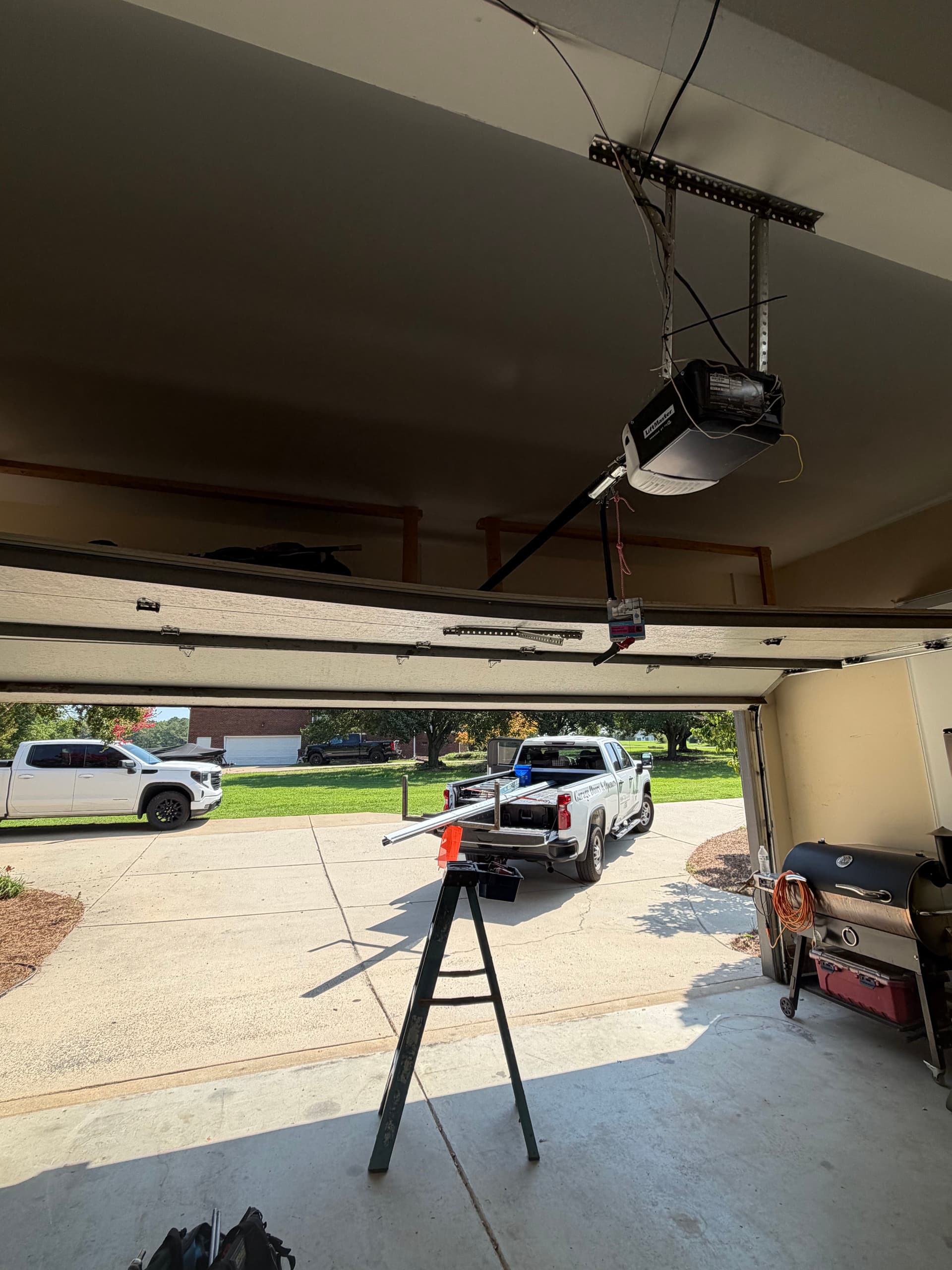
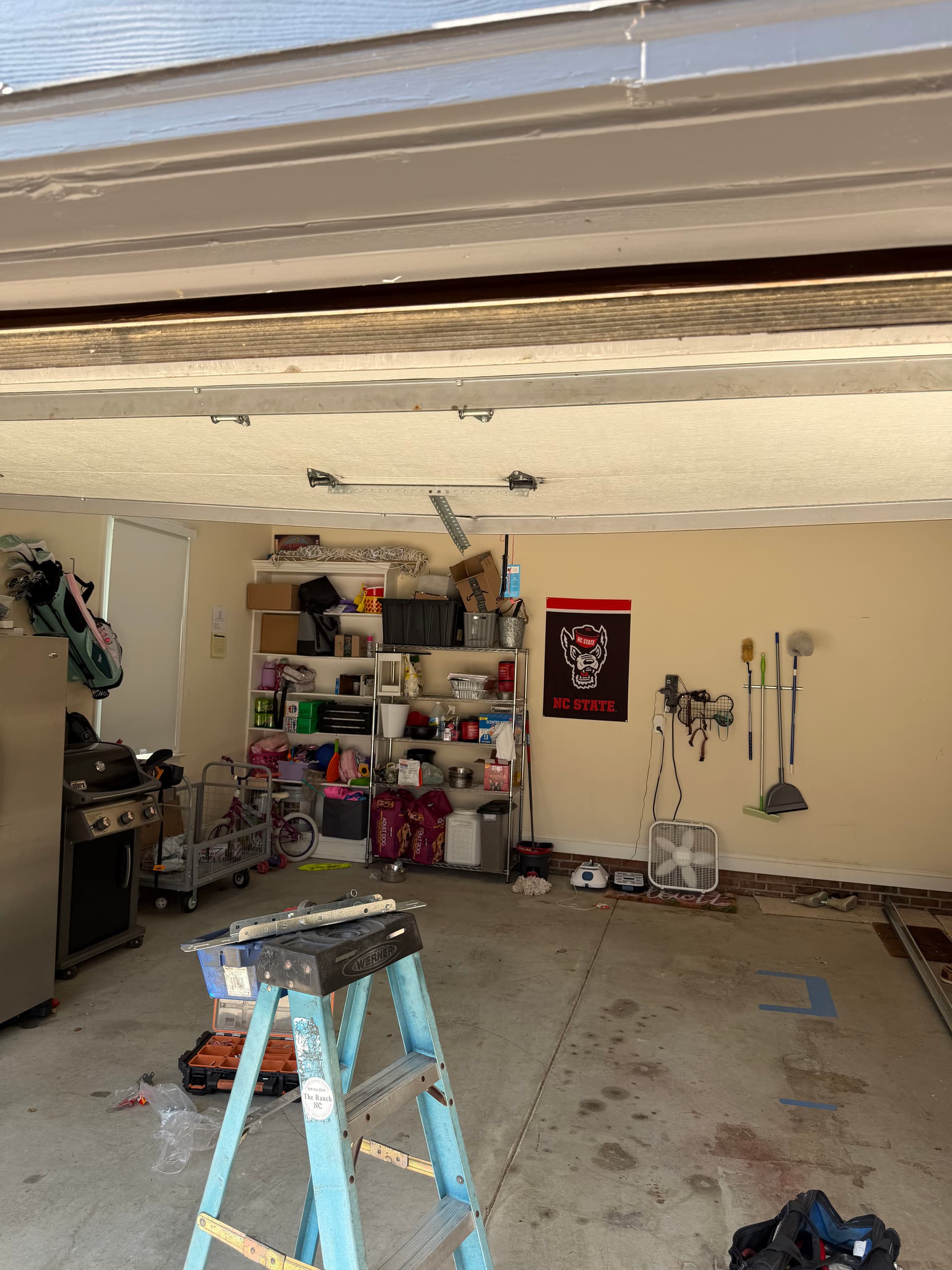
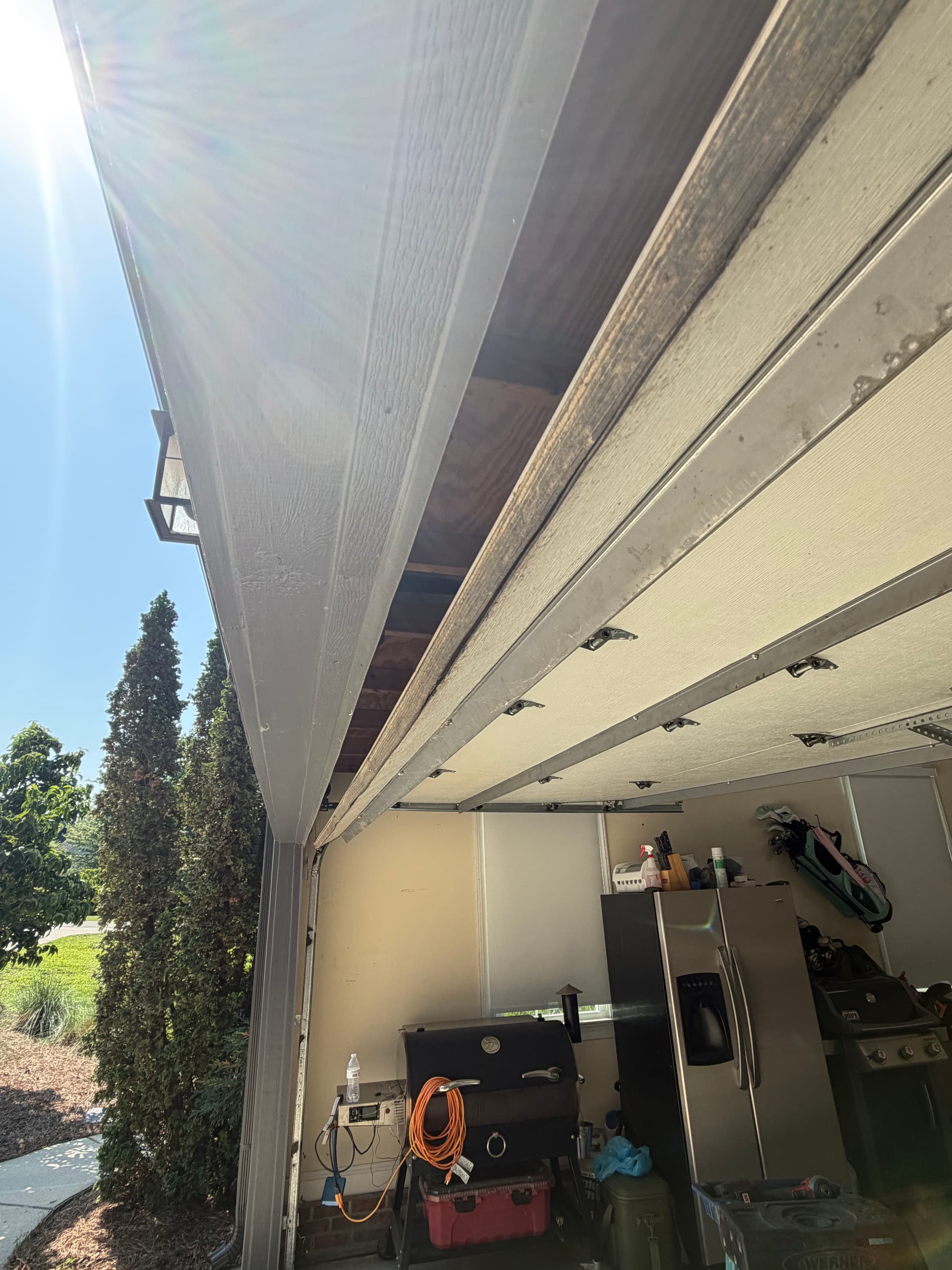
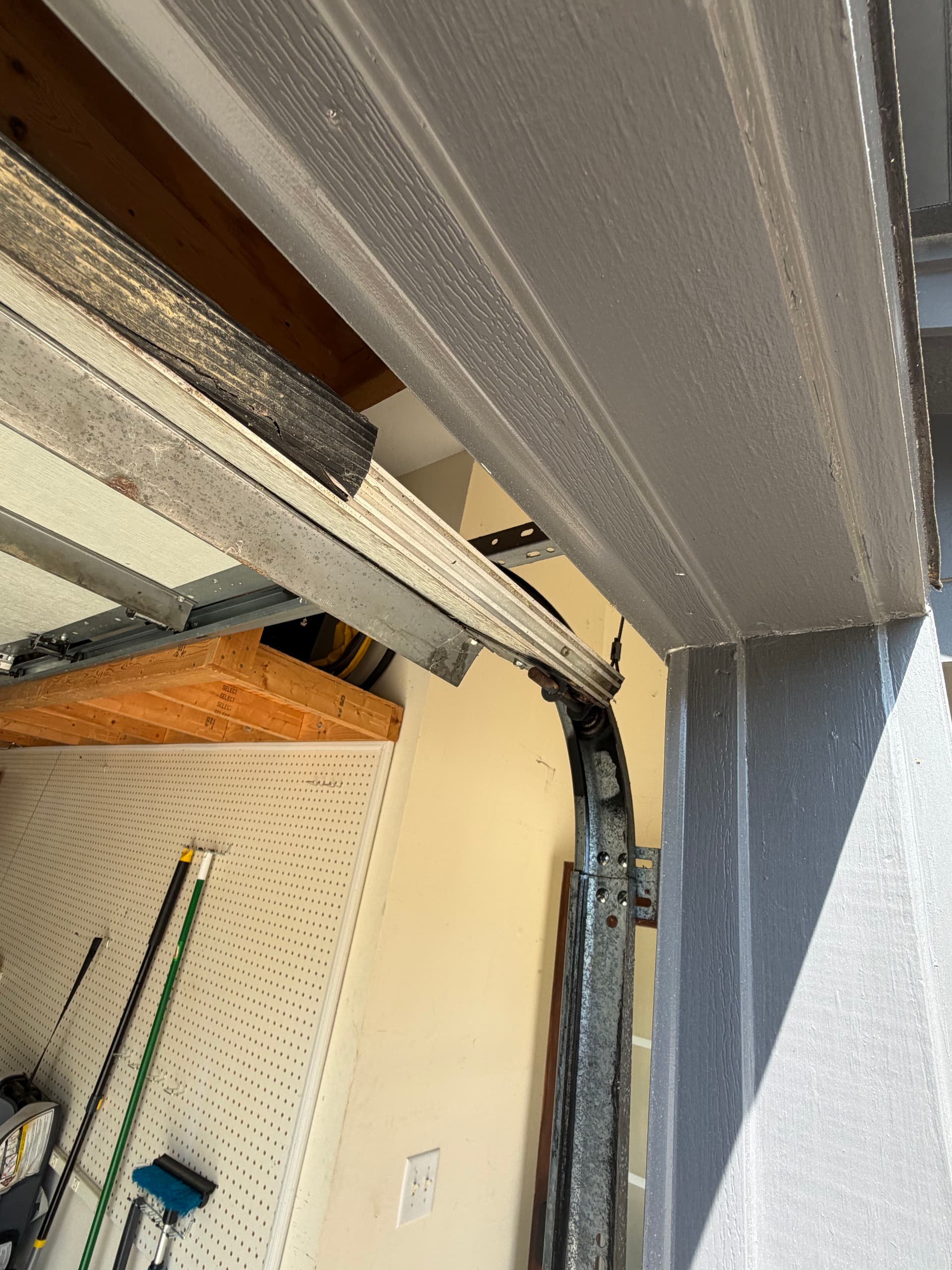
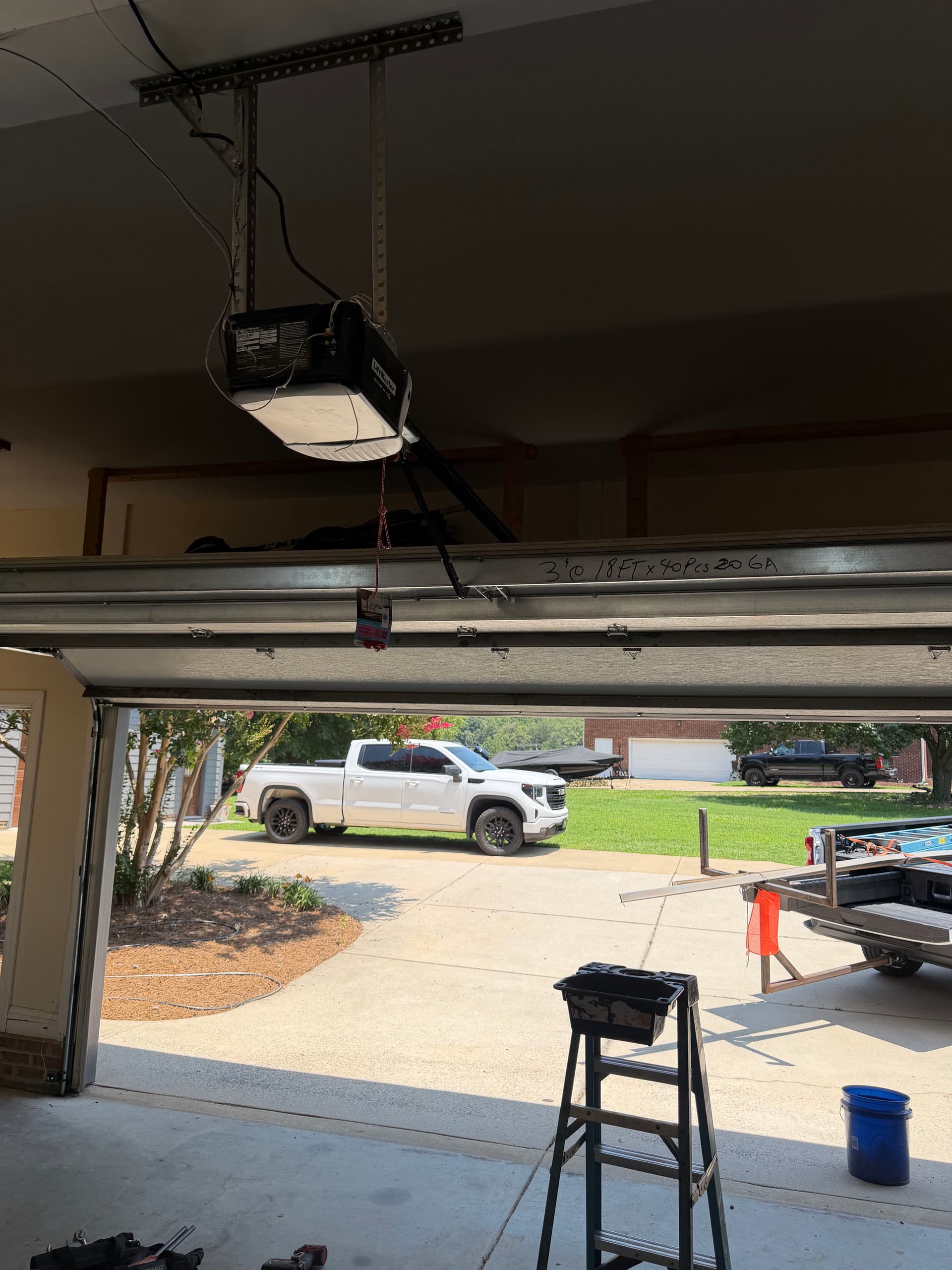
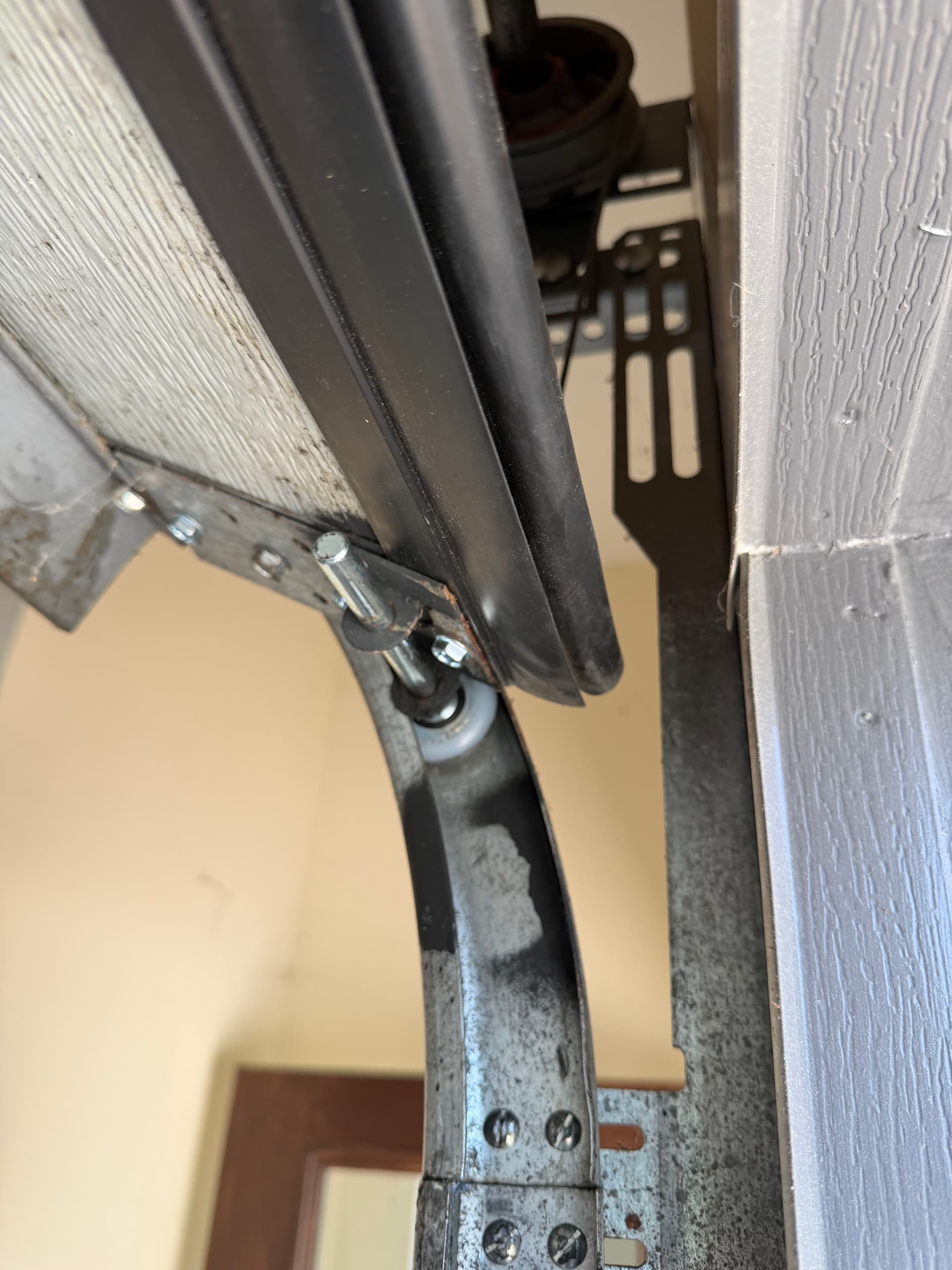
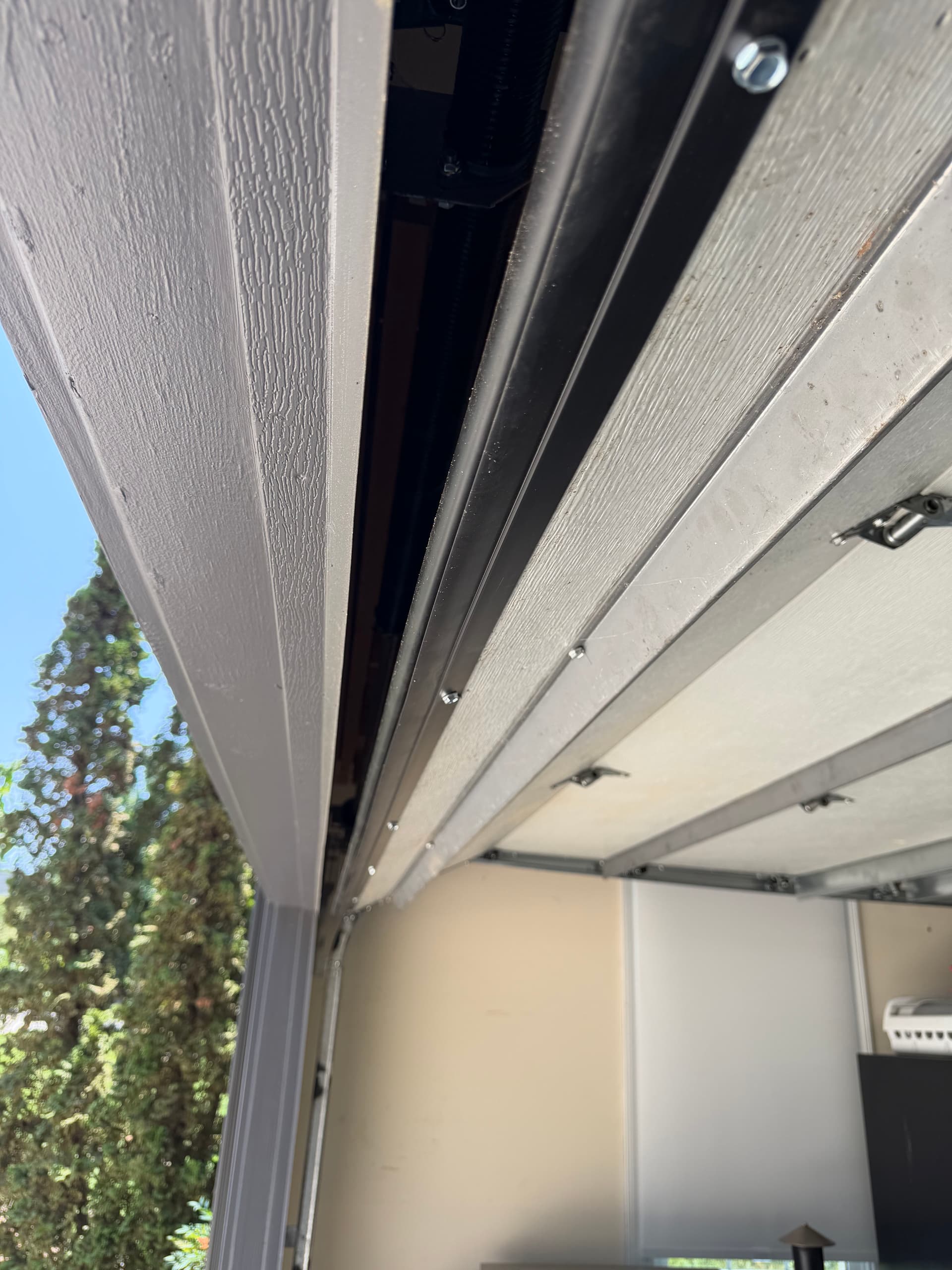
This door was in rough shape. The top section was visibly sagging and flexing under the stress of the opener - which is one of the most common ways a garage door ends up going off track. Left alone, it was only a matter of time before the whole thing failed mid-cycle. That's not a fun situation to deal with, especially when it happens to be your only way in or out of the garage.
Here's what we were working with: a structurally weak top section taking a beating every single time the opener ran. The opener pulls directly on that top panel, and without proper reinforcement, the panel bends. Bend it enough times and the door starts to bind, skip the tracks, or just stop moving altogether. We've seen it plenty.
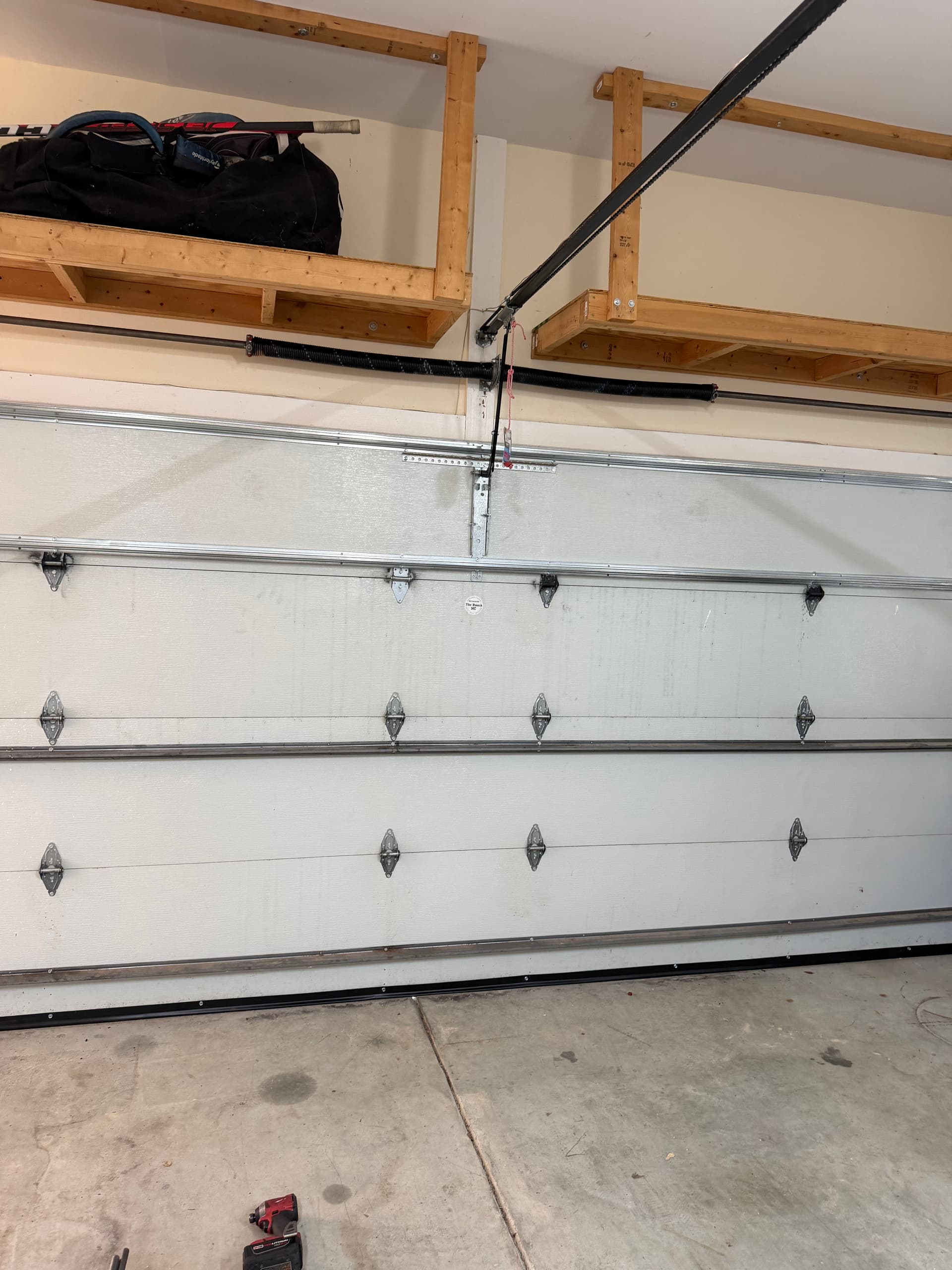
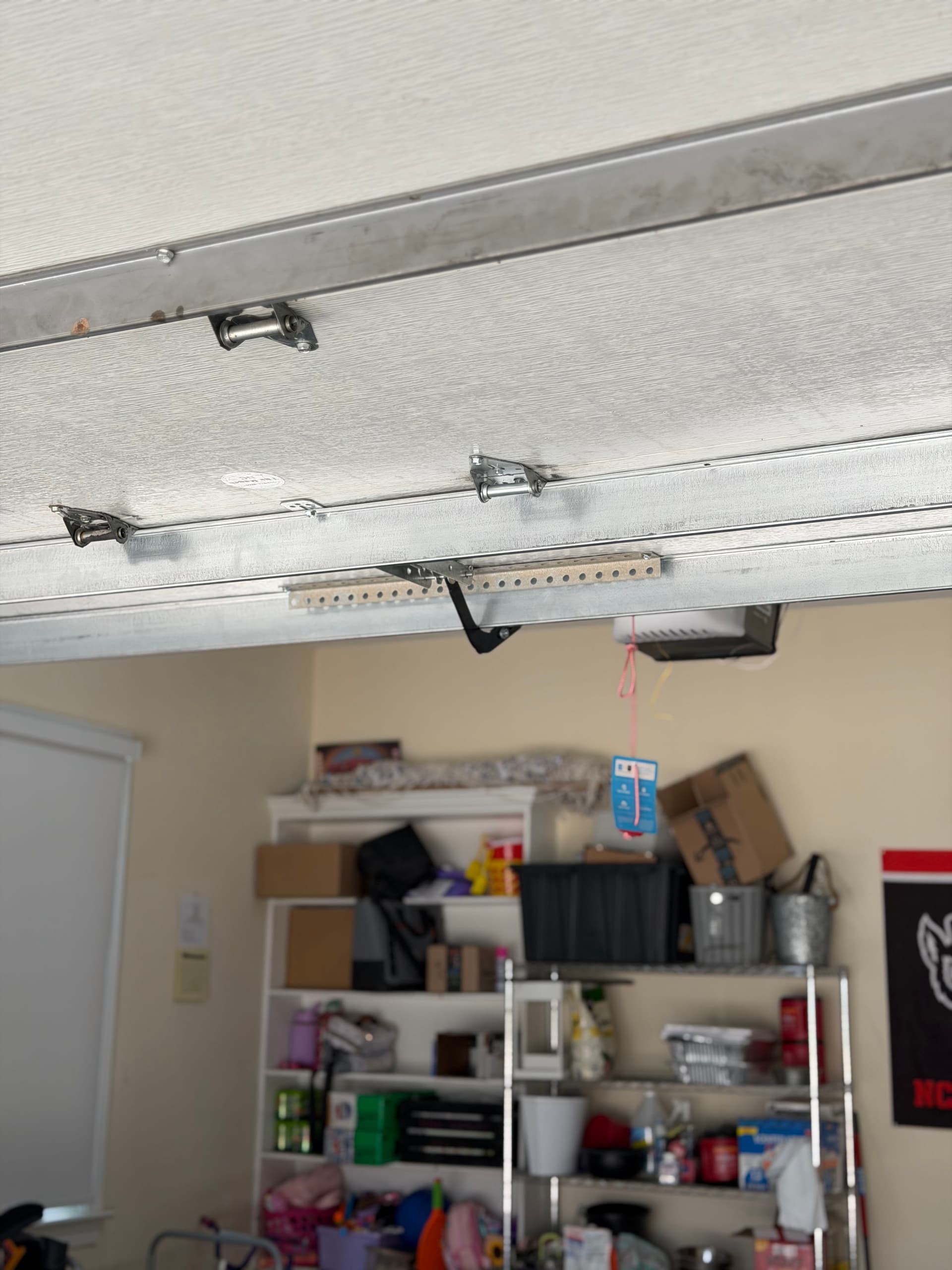
So we rebuilt the weak points. Two heavy-duty 3-inch support struts were installed across the door to restore rigidity and distribute the load properly. We also added an Operator Reinforcement Bracket - the ORB - right where the opener rail connects to the top section. That bracket takes the stress off the panel itself and transfers it to the frame where it belongs. Night and day difference in how the door handles the opener's pull.
While we were in there, we also swapped out the rollers for premium nylon units, replaced the torsion springs with high-cycle versions built to last, and put in a new vinyl bottom seal. Every one of those upgrades matters. Nylon rollers run quieter and smoother than worn steel ones. High-cycle springs are rated for far more open-close cycles than standard springs. And a fresh bottom seal closes off the gap that lets in water, dirt, and whatever else tries to sneak under the door.
The end result is a door that runs clean, sits flat, and isn't quietly working its way toward a breakdown. Your garage door is the largest moving part of your home - it deserves to actually work right. If yours is sagging, noisy, or fighting the opener, that's not something to wait on.